
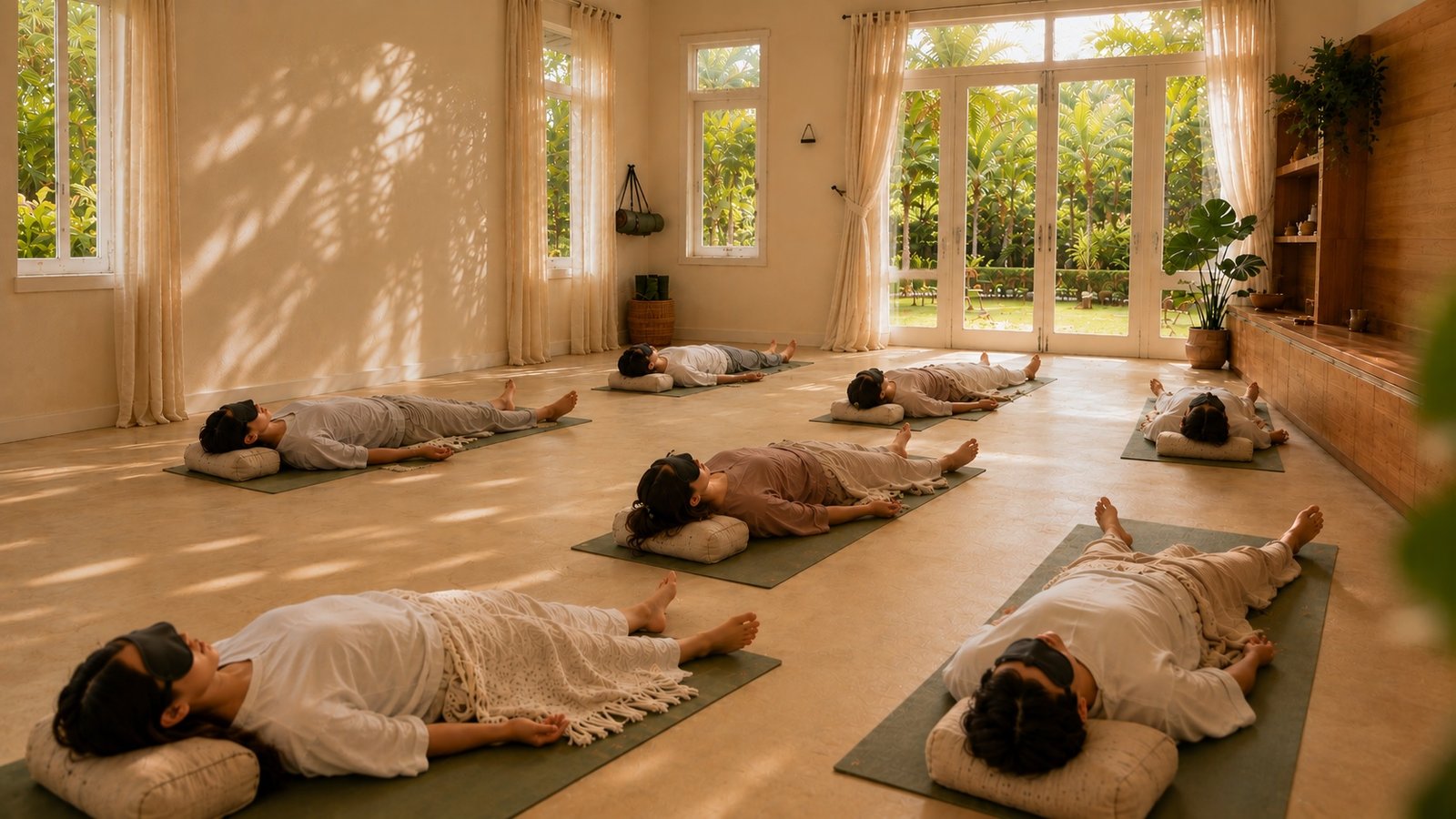

The Art of Conscious Rest

Yoga Nidra is often described as "yogic sleep," yet it is much more than relaxation.

Guided by the teacher's voice, while you are laying down on a mat, you are invited into a state between wakefulness and sleep where the nervous system can deeply recover while awareness remains present.

Without movement or physical effort, this practice creates ideal conditions for mental clarity, emotional balance, and profound rest.

Originally developed within the Satyananda Yoga tradition at the Bihar School of Yoga, Yoga Nidra has become one of the world's most respected practices for nervous system regulation, emotional wellbeing and conscious relaxation.

1 Hour Group Class 10€

Suitable for everyone, regardless of age or yoga experience.

WHY PRACTICE YOGA NIDRA

Simple to Practice.
Powerful to Experience.

Deep Rest

Release accumulated physical and mental fatigue while allowing the body to recover naturally.

Nervous System Balance

Encourages the shift from chronic stress toward a calmer, more regulated state.

Mental Clarity

Create space for greater focus, emotional resilience and inner stability.

"Yoga Nidra is the doorway between doing and simply being.”

A practice of effortless awareness.

What Happens During a Session?

1

Arrive & Settle

Take a comfortable position on your mat using blankets, bolsters and an eye pillow. Once settled, there is nothing to do—simply allow yourself to be guided.

2

Sankalpa

At the beginning of the practice, you are invited to silently plant a personal intention, known in the yogic tradition as a Sankalpa—a simple, positive resolve that gently supports inner transformation.

3

Guided Awareness

Follow the teacher's voice through a carefully structured sequence of body awareness, breath observation, visualisation and inner attention, allowing the mind to gradually settle.3

4

Conscious Rest

As the body releases tension, the nervous system naturally shifts into a state of profound rest while awareness remains quietly present.

5

Gentle Return

The session concludes with a gradual return to the body and the surrounding environment, allowing you to integrate the experience before opening your eyes.

6

Carry the Experience

Most participants leave feeling calmer, clearer and deeply restored, often noticing the benefits well beyond the practice itself. Duration:Approximately 60 minutes.

BOOK A SESSION

BENEFITS

Restore Your Body.
Steady Your Mind.

Yoga Nidra combines yogic wisdom with a growing body of modern scientific research.
By gently guiding the nervous system into a state of conscious rest, the practice supports both physical recovery and emotional wellbeing while maintaining gentle awareness.

Reduce Stress & Anxiety

Calms the nervous system and helps release accumulated mental and physical tension.

Improve Sleep Quality

Supports deeper, more restorative sleep and may reduce the need for recovery time.

Enhance Emotional Balance

Promotes greater emotional resilience, self-awareness and mental clarity.

Regulate the Nervous System

Activates the parasympathetic nervous system, allowing the body to shift from stress to restoration.

Support Physical Recovery

May help lower heart rate and blood pressure while encouraging the body's natural healing processes.

Deep Conscious Rest

Encourages slow brainwave activity associated with profound restoration while awareness remains present.

Suitable For

Beginners
Busy Professionals
Parents
Athletes
Meditation Practitioners
Anyone Experiencing Stress or Fatigue

Frequently Asked Questions

Everything You Need to Know

Answers to the most common questions about Yoga Nidra and what to expect during your first session.

How is Yoga Nidra different from meditation?
While both practices cultivate awareness, they follow different approaches and complement one another rather than compete.

Yoga Nidra is a fully guided practice performed lying comfortably on your back. Through a carefully structured sequence of body awareness, breath observation and inner attention, it gently explores the space between wakefulness and sleep while cultivating conscious rest.

Traditional meditation is most often practiced seated and encourages stable attention while remaining fully awake, usually by focusing on the breath, a mantra or present-moment awareness.

Both practices support clarity, emotional balance and wellbeing, but Yoga Nidra offers a unique path into profound rest while maintaining gentle awareness.
Can I fall asleep during Yoga Nidra?
Yes.

Many people naturally drift into sleep, especially when they are physically or mentally exhausted.

The ideal experience is to remain gently aware while the body rests deeply, but falling asleep is completely normal. Even if you do, your body and nervous system can still benefit from the practice.
Do I need previous experience?
No.

Yoga Nidra is suitable for complete beginners as well as experienced yoga and meditation practitioners.

No flexibility or previous knowledge is required—simply arrive with comfortable clothing and an open mind.
Is Yoga Nidra hypnosis?
No.

Although both practices involve deep relaxation, Yoga Nidra does not rely on suggestion or manipulation.

Instead, it follows a structured sequence of awareness that naturally calms the mind while allowing consciousness to remain present throughout the practice.
Is Yoga Nidra simply relaxation?
Yoga Nidra goes beyond relaxation.
Rather than simply releasing physical tension, it follows a precise methodology that guides awareness into a state of conscious rest, where the body can recover deeply while the mind remains quietly awake.
What should I bring?
Wear comfortable clothing that allows you to stay warm and relaxed.
We provide everything you need for your practice, including:
  • Yoga mat
  • Blanket
  • Bolster
  • Eye pillow
Simply arrive a few minutes early and allow yourself time to settle before the session.